
2026 Upstander Academy for faith leaders
Cambridge and Cape Cod, Massachusetts
June 1–4, 2026
Background
The Upstander Academy is an immersive learning experience for educators, museum professionals, national parks staff, faith leaders, and community members who seek a deeper understanding of the history and contemporary reality of the Original peoples of the place now called the United States. Our focus is on the northern Dawnland, otherwise known as New England.
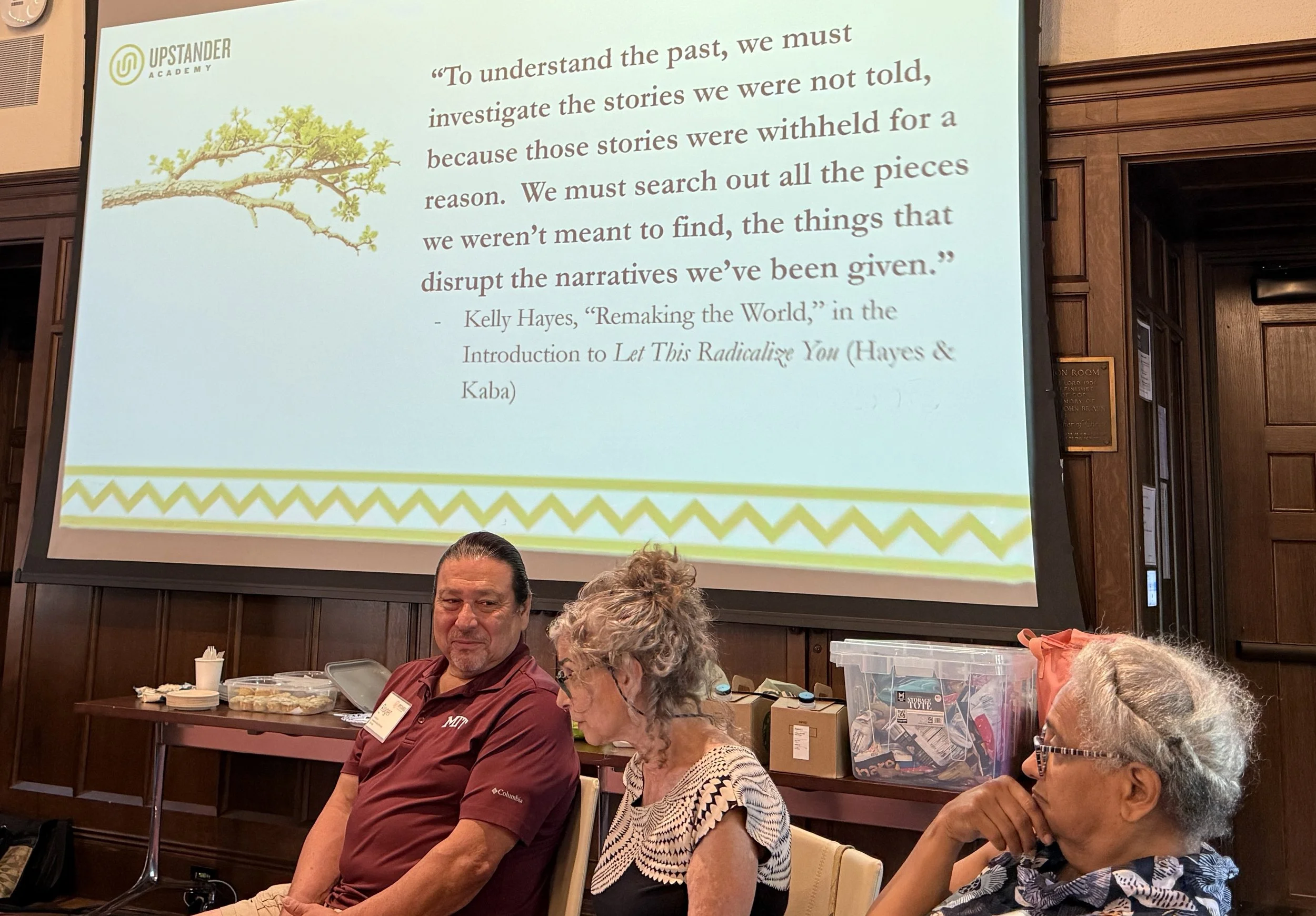
The Upstander Academy was founded in 2016 by Upstander Project, in partnership with the University of Connecticut’s Dodd Research Center and the Mashantucket Pequot Museum and Research Center, in response to repeated teacher demand for a deeper dive into the Indigenous history of the Dawnland. With its predominantly Native faculty and a participatory, generative approach to learning and unlearning, the Upstander Academy has supported hundreds of educators to reflect deeply on the history of the land and the people who have lived here for thousands of years. Faculty are co-learners when not presenting. The Upstander Academy touches the mind, body, heart, and spirit of those who participate. While most academy participants have been classroom teachers, school administrators, and museum educators, superintendents and rangers from the National Park Service, and faith and lay leaders have also attended the academy.
The history of the place now called Massachusetts, being deeply rooted in the genocide and attempted erasure of the Original peoples, will be at the center of our inquiry during the 2026 Upstander Academy for Faith Leaders.
While the origin story of the United States is often narrated according to events that happened here, much of what we learn is referred to as “twistory” in Indian Country. Most of us do not know about the kidnappings, enslavement, banishment, indentured servitude, and forced removal of Native youth and children across four centuries. Most of us do not know that 82 colonial-era laws were passed in this region that terrorized the Original peoples -- children, women and men -- by placing a bounty on their scalps. Some who promulgated these laws worshiped in churches that still exist today. In the mid-1700s, in Portland, Maine, Reverend Thomas Smith of First Parish Church organized a scalp posse and profited from the rewards collected by his parishioners. Most of us do not know about fraudulent land deals that led to the dispossession and impoverishment of those who trace their presence here back thousands of years. Most of us do not know that descendants of the Original peoples in Massachusetts classrooms have been repeatedly told they are lying when they claim their heritage.
What does this mean for us today? At the Upstander Academy, participants learn this history from Native and non-Native faculty and have a chance to think together about strategies they can use to help their communities so we can all move forward together.
In 2024, in close consultation with Reverend Dan Smith, formerly senior minister of First Church Cambridge, and a core team of local faith and lay leaders, we hosted a five-day Upstander Academy in Cambridge, Massachusetts for twenty-five people who wanted to delve into the history of the land, its people, their survivance and the trauma that continues today. The academy was co-directed by Roger Paul and Mishy Lesser. Elizabeth Solomon of the Massachusett Tribe at Ponkapoag served as the core faculty. With support from the Charlotte Foundation, the Cambridge Community Foundation, and area churches, we learned about history and culture and practiced a somatically-informed approach to learning and unlearning the history of place and the importance of waterways.
In 2026, in collaboration with alumni, Upstander Project will offer a four-day Upstander Academy for local faith and community leaders. The true per person cost is $1000. Participants who can contribute more will make it possible for others to attend.
The Upstander Academy is co-directed by Dr. Mishy Lesser and Roger Paul (Passamaquoddy/Wolastoq). Elizabeth Solomon (Massachusett Tribe) is lead faculty for the academy.

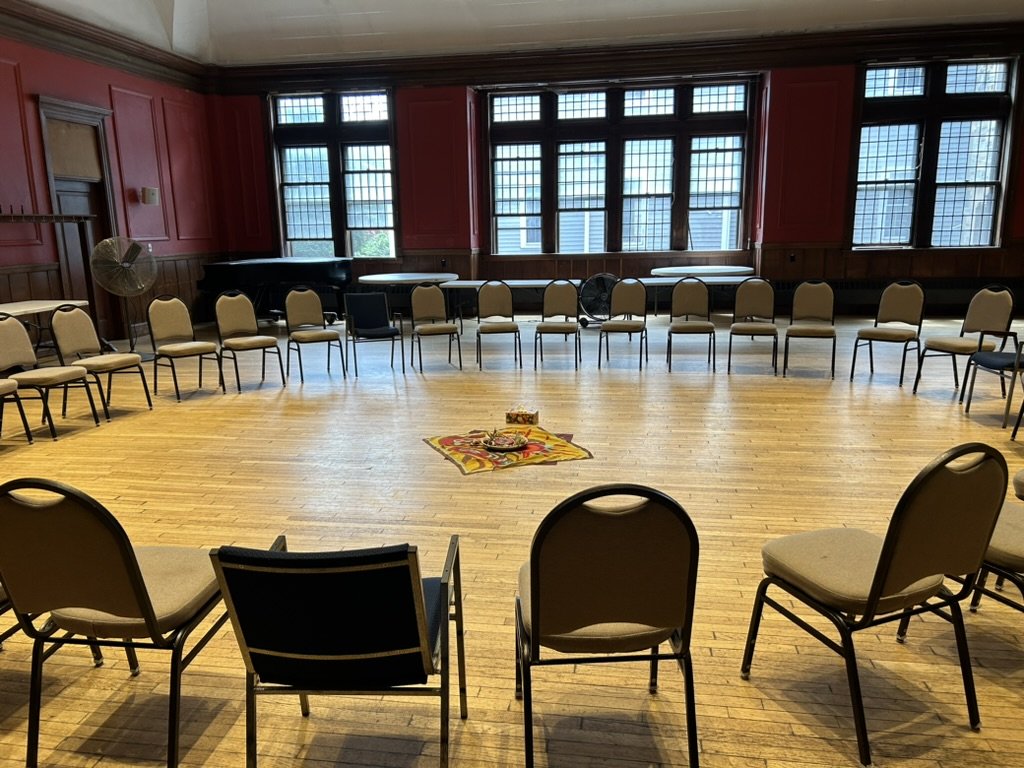

2026: a four-day Upstander Academy in Cambridge and Cape Cod, Mass.
The 2026 Upstander Academy for Faith Leaders will be held in person in Cambridge and in Mashpee and Cotuit from June 1–4, 2026. There will be a pre-meeting to build community prior to the launch of the academy on May 20th [Zoom].
In collaboration with our alumni, Upstander Project will offer a four-day Upstander Academy for Faith Leaders for twenty people who worship in or near Cambridge/Boston and in Mashpee and Cotuit on Cape Cod. Knowledge keepers from Mashpee will help participants deepen their understanding of the impact of settler colonialism on the Original peoples of this land. The academy will be hosted by our colleagues at Harvard Divinity School and the Cotuit Federated Church in Barnstable where we will share moments of contemplative practice and delve into the history of the land, its people, and the survivance and trauma that resonates today for descendants of the Original peoples.
Leadership & Contact
The Academy is co-directed by Dr. Mishy Lesser and Roger Paul (Passamaquoddy, Wolastoq), joined by core faculty member Elizabeth Solomon (Massachusett Tribe at Ponkapoag). Reverend Dan Smith (Community Minister, Cotuit Federated Church), is part of the leadership team that has planned the academy.
For more information contact info@upstanderproject.org.
Upstander Academy co-directors, FAculty and Staff

Roger Paul (Passamaquoddy, Wolastoq) (he/his) is the co-director of Upstander Academy. He was born to a Passamaquoddy mother who, soon afterward, walked on to the spirit world. His father, who was Wolastoq, along with his community, went to great lengths to protect him from state “child welfare” officials who wanted to send him away to residential school or place him in the foster care system. Thus, Roger grew up on many reservations throughout Maine and New Brunswick. His older brothers and sister were not as fortunate. They were taken and sent to the residential school at Shubenacadie. Roger holds a master’s degree in linguistics from MIT and works as a Wabanaki Languages teacher with the Penobscot Nation, the University of Maine at Orono, and the University of Southern Maine. He takes an active and diligent role in Wabanaki communities towards the preservation, continuing growth, and prosperity of the Wabanaki language, culture, and people.

Mishy Lesser, Ed.D., (she/her) is the learning director for Upstander Project and an Emmy® award-winning researcher. She co-directs the Upstander Academy. She is also a Strassler Center for Holocaust and Genocide Studies Affiliate and was an Education Fellow at the Dodd Human Rights Impact at the University of Connecticut. Mishy has authored Upstander Project’s many learning and viewer guides. She is a Circle Keeper and has been featured on WBUR (Boston) and PRI/BBC’s The World. Mishy was a Fulbright Scholar in Ecuador and spent 12 years learning and working in the Andes. She is a descendant of Ashkenazi Jews whose ancestral language is Yiddish.

Elizabeth Solomon (Massachusett Tribe at Ponkapoag) is an enrolled member of the Massachusett Tribe at Ponkapoag and volunteers to represent the Massachusett Tribe in a variety of public, educational, and cultural spaces. Ms. Solomon is a frequently sought after speaker on local indigenous history and contemporary issues. She has a long-standing commitment to human rights, diversity, inclusion, and community-building.
Elizabeth E. Solomon was one of the first local Indigenous students to graduate from Harvard College ('79) after Cheeshahteaumuck and Iacoomes enrolled in 1661. She recently retired as Director of Administration at the Harvard School of Public Health.
Ms. Solomon recently completed a master’s degree in museum studies and has a strong commitment to work with Native communities and others that are currently underrepresented in museum exhibits and public history programs to assist them with bringing their voices and stories to the forefront.
With Gratitude to Our SUPPORTERs
We are deeply grateful to those whose generosity and support makes the Upstander Academy possible.
Special thanks to the Cambridge Community Foundation for their contributions for 2024-2026.