A SEVEN-DAY residential program based
in Passadumkeag, Maine and Boston, MAssachusetts
June 27 - July 3, 2026
upstander academy
June 27 - July 3, 2026
The Upstander Academy is a seven-day professional learning program designed to give up to 25 teachers, curriculum designers, and public historians, grades 3 through 12, an immersive and experiential understanding of Native American history and contemporary realities in the Dawnland, present-day New England. In this region, the colonial narrative remains thick and for many, uncontested. With a majority of Native faculty, the academy aims to help teachers increase their understanding of pre-American Revolution history as they ground themselves in the land-based histories of the first peoples to cherish this place. We will accomplish this by learning and unlearning on tribal homelands from those whose lives have always been interwoven with their ecosystems. We will walk on Native lands and listen to and learn from the stories they hold.
The Upstander Academy will deepen participants’ content knowledge to expand curricular offerings and provide context and nuance to conversations and commemorations that are already occurring in their communities as we approach the 250th anniversary of the signing of the Declaration of Independence on July 4, 2026. Upstander Academy will create a space for participants to develop new perspectives and engaging discussion questions that support inquiry in their classrooms and public history spaces.
Two overarching themes will help structure the Upstander Academy. The first, “Land-based Learning and Indigenous Histories,” will focus on the land and waterways, filled with immersive and experiential learning opportunities and place-based visits. What has been lost due to colonization? How have Native communities been impacted by the poisoning of the rivers that have sustained them for 13,000 years? How are Native peoples restoring ecosystems, removing dams, reintroducing species and practices that were forbidden by colonial policies? What role does language recovery play in the survivance of peoples who have been subjected to attempts to exterminate them? We will center Indigenous knowledge systems through the lens of land, ecosystems, history, and language. The second, “Memorialization and Land-based Learning,” will focus on public history sites and the hard history that has been hidden for centuries. Participants will engage with curricular representations of Native American history, as well as workshops to strengthen their content knowledge. They will learn about Indigenous pedagogy and have an opportunity to practice new approaches and skills.
TUITION
Educators deserve access to transformative learning opportunities, and we are committed to making the Academy accessible to all who feel called to this work. Thanks to the generosity of funders and donors, we offer a Pay-What-You-Can tuition model.
We ask participants to first seek professional development funding from their school districts or sponsoring institutions to cover as much of the cost as possible. Participants may contribute anywhere from $0 up to $1,000 for tuition.
The full cost of running the 2026 Academy is approximately $147,000 for 25 participants. Working together, we can ensure that everyone is able to attend, regardless of the amount they contribute. No one will be turned away for lack of funds.
COSTS
Meals
The majority of meals will be included. Please plan to pay for 4-5 meals on your own.
Lodging
Lodging is included for the nights of June 26th through July 2nd. Participants will share a room with another participant for the majority of the program. You may let us know if you require a medical accommodation. You are welcome to sleep at home if we’re close.
Transportation
While a personal vehicle is not required for participation, participants who have access to a vehicle are free to bring it. The Academy will involve travel to multiple sites, and having participants with vehicles will help support group transportation needs and reduce costs for all.
We will survey participants in advance about their transportation plans and vehicle availability and will help coordinate carpools so everyone can participate. Drivers who host carpools will be given a transportation stipend to help offset costs.
APPLICATION DEADLINES:
February 23, 2026: applications open;
April 27, 2026: applications due;
May 5, 2026: applicants will be notified; (updated on 4/28/26)
May 15, 2026: applicants must accept or decline.
LOGISTICS
The Academy starts June 27th at 10:30am at the Penobscot Nation Tribal Offices on Indian Island, ME.
It ends on July 3, 2026 in the afternoon in Boston, MA.
More details about logistics, including schedule, housing, and meals will be shared with accepted applicants once their participation is confirmed.
TESTIMONIES OF UPSTANDER ACADEMY ALUMNI
“The experience was deeply thought out, intellectually rigorous, emotionally powerful, and incredibly well-coordinated. It is a career changing type of opportunity that will inspire and drive your teaching for the future.” - Adam Machson-Carter
"Not only did the academy give me tremendous personal growth and practical professional development, but the work is so important, it needs to go as far as it can. I would highly recommend it to any colleague who has the mental capacity to open their mind to this. I'm deeply grateful for the many indigenous perspectives among the faculty, and cannot state how grateful I am for your labor and pain in service to our learning." - Anonymous
“I carry what I learned at Upstander Academy with me everyday. The academy made me feel validated and empowered me to teach the truth and to step into teaching difficult history. It let me know that I am not alone in my efforts to share Indigenous knowledge in the classroom through curriculum and instruction that carries the culture of my ancestors.” - Brad Lopes
“UA was the door opening to my willingness, openness and desire to learn more about what happened on this land before colonizers came. It has impacted so much more than my classroom and the way I teach. It’s impacted the way I see the world. Everything I think and teach about what we currently call the United States is different.” - Wendy Panchy
“Working with the educators at Upstander has inspired me to look at what we do as a form of art: we are facilitators of dialogue and igniters of curiosity, and we all have an important role in the process of ‘interrogating reality,’ as Mishy has put it. By using the listening circle every day in my own classroom and revealing what Roger Paul has called ‘twist-ory,’ students are connecting to the content like I have never seen before.” - Wren Marie Gallant

WHAT WILL I DO AT UPSTANDER ACADEMY?
Upstander Academy participants are immersed in a variety of experiences and activities designed to promote deep reflection and transform learning environments:
Rethink U.S. history through the lens of tribal knowledge-keepers and scholars.
Reflect on the survivance of Native peoples and the impact of genocide on their communities.
Test innovative teaching methods that support critical and creative engagement.
Learn to interrogate stories from the land, as well as oral histories and written sources.
Practice and model upstander skills and join a vibrant community of upstander educators.
Upstander Academy co-directors

endawnis Spears (Diné, Ojibwe, Chickasaw, Choctaw) (she/her) is the codirector of Upstander Academy. She is also the director of outreach and programming and a founding member of the Akomawt Educational Initiative, an Indigenous education and interpretive consultancy. She is also a Practitioner in Residence for Tribal Engagement for the Swearer Center at Brown University. She has worked with and for Native communities and museums across the country. Previously, endawnis worked in the education, marketing and development departments of the Mashantucket Pequot Museum and Research Center. Originally from Camp Verde, Arizona, she lives in Rhode Island with her husband Cassius Spears Jr., and their four children, Nizhoni, Sowaniu, Giizhig and Tishominko.

Roger Paul (Passamaquoddy, Wolastoq) (he/his) is the co-director of Upstander Academy. He was born to a Passamaquoddy mother who, soon afterward, walked on to the spirit world. His father, who was Wolastoq, along with his community, went to great lengths to protect him from state “child welfare” officials who wanted to send him away to residential school or place him in the foster care system. Thus, Roger grew up on many reservations throughout Maine and New Brunswick. His older brothers and sister were not as fortunate. They were taken and sent to the residential school at Shubenacadie. Roger holds a master’s degree in linguistics from MIT and works as a Wabanaki Languages teacher with the Penobscot Nation, the University of Maine at Orono, and the University of Southern Maine. He takes an active and diligent role in Wabanaki communities towards the preservation, continuing growth, and prosperity of the Wabanaki language, culture, and people.

Mishy Lesser, Ed.D., (she/her) is the learning director for Upstander Project and an Emmy® award-winning researcher. She is also a Strassler Center for Holocaust and Genocide Studies Affiliate and was an Education Fellow at the Dodd Human Rights Impact at the University of Connecticut. Mishy has authored Upstander Project’s many learning and viewer guides. She is a Circle Keeper and has been featured on WBUR (Boston) and PRI/BBC’s The World. Mishy was a Fulbright Scholar in Ecuador and spent 12 years learning and working in the Andes. She is a descendant of Ashkenazi Jews whose ancestral language is Yiddish.
Upstander Academy faculty
Upstander Academy faculty are experienced Native Studies scholars, genocide educators, documentary filmmakers, and museum educators with deep knowledge about the issues we address.
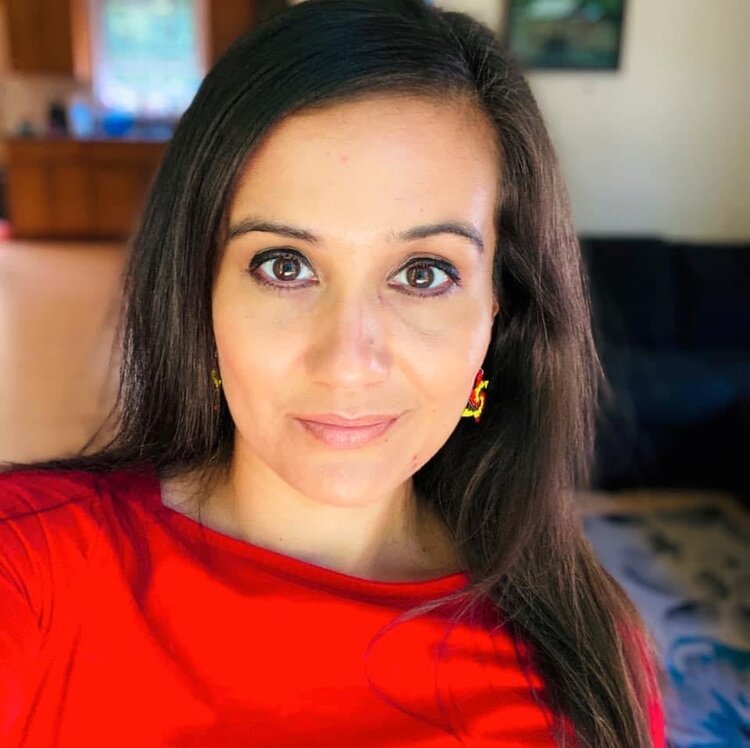
Maulian Bryant (Penobscot Nation) (she/her) is codirector of and a participant in Bounty. She is an Upstander Project collaborator. She holds a BA in political science from the University of Maine and an honorary Doctorate of Law from Colby College. She is the former Penobscot Nation tribal ambassador and current Executive Director of the Wabanaki Alliance which advocates for local, state, and federal policy changes focused on tribal sovereignty, the environment, public health, domestic violence advocacy, and other areas affecting the Wabanaki tribes in Maine. She is the cochair of the state's Permanent Commission on the Status of Racial, Indigenous and Maine Tribal Populations; cochair of the Maine Climate Council's Equity Subcommittee and member of the Maine Climate Council; member of the Permanent Commission on the Status of Women; and serves on many other boards and organizations. She is also a writer and her play, Molly, tells the story of Molly Spotted Elk, a Penobscot actress, writer, activist, and dancer in the early 1900s. Maulian’s advocacy has helped pass laws at the state level and she has testified in favor of tribal rights in the United States House Appropriations process numerous times.

Chris Newell (Passamaquoddy) (he/his) is the Tribal Community Member-in-Residence at UConn and the director of education at the Akomawt Educational Initiative. He is a lifetime educator. He was born and raised in Motahkmikuhk (Indian Township, ME) and is a proud citizen of the Passamaquoddy Tribe at Indian Township. He served for six years as the Education Supervisor for the Mashantucket Pequot Museum and Research Center. Out of the museum, Chris and his colleagues founded the Akomawt Educational Initiative in response to the public school system’s lack of representation of Native history and social studies. Chris was the senior adviser on Upstander Project's Emmy-award winning documentary, Dawnland. He is author of If You Lived During the Plimoth Thanksgiving and If You Lived During the American Revolution, both published by Scholastic.


Dina Gilio-Whitaker (Colville Confederated Tribes) (she/her) is a lecturer of American Indian Studies at California State University San Marcos and a consultant and educator in environmental justice policy planning. Dina’s research focuses on Indigenous nationalism, self-determination, environmental justice, and education. Dina is co-author with Roxanne Dunbar-Ortiz of All the Real Indians Died Off and 20 Other Myths About Native Americans and author of As Long as Grass Grows: The Indigenous Fight for Environmental Justice from Colonization to Standing Rock.
Dr. Claudia A. Fox Tree (Iukaieke Guainia Taino-Arawak) (she/ her) is an Indigenous educator, activist, and public speaker with more than 35 years in education. Her work focuses on decolonizing curriculum, racial identity development, and expanding Indigenous representation in teaching and scholarship. Through storytelling and dialogue, she supports educators in challenging stereotypes and building more inclusive learning environments. Claudia earned her Master’s Degree in Education from Northeastern University and Ph.D. from Lesley University, both on unceded Massa-adchu-es-et and Pawtucket territory. She has been a board member of the Massachusetts Center for Native American Awareness (MCNAA) since 2000 and a Massachusetts liaison for the United Confederation of Taino People (UCTP) since 1998.

Dr. Sarah B. Shear is an Associate Professor of Social Studies and Multicultural Education at the University of Washington-Bothell. Her award-winning scholarship examines settler colonialism in K-12 social studies curriculum, teacher education, popular media, and qualitative research methods. As a member of the Turtle Island Social Studies Collective, Dr. Shear is committed to collective action to combat oppression in education. She enjoys baking and taking road trips with her two fur kids, Nico and Odin.
With Gratitude to Our SUPPORTERs
We are deeply grateful to those whose generosity and support makes the 2026 Upstander Academy possible:
Brian A. Reardon Fund
Broad Reach Fund
Susanne M. Collins Foundation
Davis Family Foundation
Elmina B. Sewall Foundation
Seth Sprague Educational & Charitable Foundation
Maine Community Foundation
Bingham Program
Hamilton Company Charitable Foundation
Margaret E. Burnham Charitable Trust
Our Upstander Academy Alumni
and individual donors!
Get Upstander Academy updates
Interested in the next Upstander Academy? Sign up below to stay up to date on application openings, screenings, workshops, and other new events and resources!
By submitting this form, you are granting: Upstander Project http://upstanderproject.org permission to email you. You may unsubscribe via the link found at the bottom of every email. (See our Email Privacy Policy for details.) Emails are serviced by Constant Contact.