
Schools District Partnerships
For generations, mainstream approaches to the teaching of U.S. history have largely omitted the deep, enduring presence of Indigenous Peoples on this land, which spans more than 12,000 years. As educators and communities across the region collaborate to unlearn historical falsehoods, Upstander Project provides the research, content, pedagogical tools, and supportive guidance teachers need to bring a fuller, more accurate history into the classroom.
Through our professional development offerings, educators learn to teach history that honors and centers the Native Peoples who cared for this land long before European arrival, and who continue to thrive here today. Our work particularly focuses on the Dawnland (present-day New England), where much of the nation's founding narrative began. We support teachers to thoughtfully examine colonization, settler colonialism, and genocide alongside ongoing Indigenous survivance and resilience. Understanding a fuller picture of the history of these lands helps people of all backgrounds, because knowledge truly is power and dispelling false narratives is inspiring and motivates each of us to be better neighbors to each other and the earth.
By combining immersive workshops, one-on-one curriculum coaching, open-source inquiry resources, and place-based outdoor learning, we equip teachers with the confidence they need to lead nuanced historical investigations. This creates an enduring multiplier effect for systemic narrative change. When teachers have the tools to reframe how history is taught, they transform the stories children inherit and carry forward, inspiring future generations to think critically and consistently seek truth.
Our Impact in Massachusetts
Since 2023, Upstander Project has partnered directly with nine Massachusetts public school districts and one independent charter school to provide teacher training, curriculum coaching, student workshops, and guided walking tours. In some districts, these partnerships span four years. This work has strengthened each district's capacity to teach genocide education and a more complete history, impacting an estimated 59,521 students in grades 3 through 12.


What We Offer
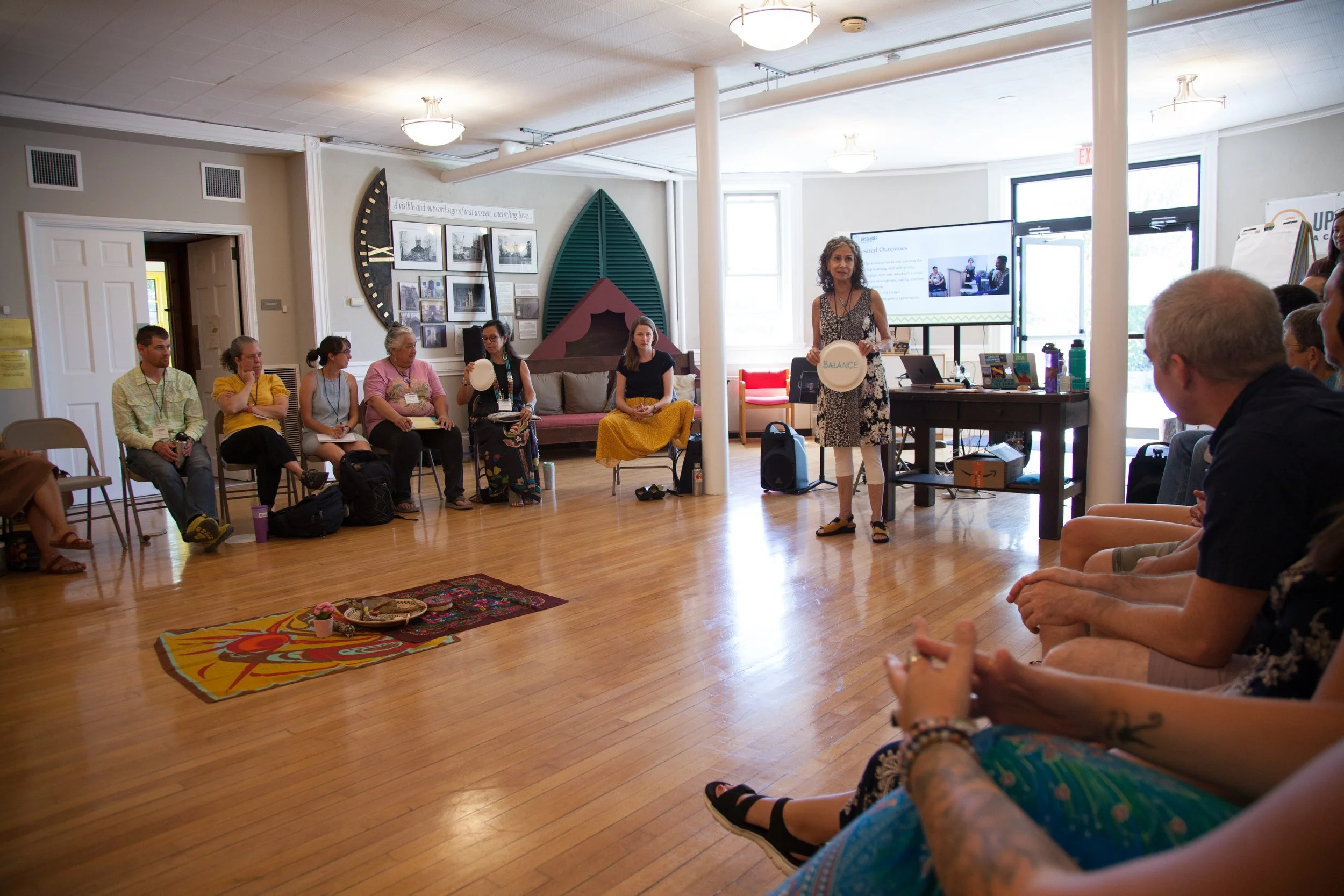
Every offering is customized in length and focus to meet the specific schedule, grade levels, and goals of each district or school’s community. Programs are facilitated by collaborative teams of Native and non-Native educators, modeling respectful intercultural dialogue, multiple perspectives, and shared inquiry. We concentrate our work in Massachusetts and Maine, and other states in the region Native peoples refer to as the Dawnland.
1. Educator Professional Development and Curriculum Coaching
Foundational Workshops: Multi-hour, full-day, and multi-day sessions introducing educators to essential concepts such as survivance, settler colonialism, Indigenous knowledge systems, the UN Genocide Convention, othering, and the ten stages of genocide.
Evidence and Inquiry-based Learning: Modeling how to engage students with complex historical evidence, including colonial scalp-bounty laws, settler journals, provincial records of land dispossession, and Native-led diplomacy.
Curriculum Coaching: Working with teachers in grade-level cohorts or 1-on-1 sessions to adapt our free, open-source Teacher's Guides, films, and other learning resources into standards-aligned unit plans.
Equipping Educators Across Grades 3–12: Providing teachers with developmental frameworks tailored to their grade bands. In grades 3–5, we show teachers how to introduce an active sense of Native presence across thousands of years, understand Indigenous science and value systems, and facilitate participatory, story-based conversations. In grades 6–12, we prepare educators to facilitate inquiry-based learning with Native educators, using local colonial records, federal policies, and international human rights frameworks.
2. Experiential and Land-Based Learning
Place-based Walking Tours: Immersive, guided walking tours along land and waterways, that uncover thousands of years of Indigenous presence and history that standard historical trails and tours overlook.
Interactive StoryMaps: Digital humanities tools that connect local geography to historical documents and images, giving students and teachers a visual, place-based platform for classroom research projects.
3. Student Leadership and Community Engagement
Student Upstander Workshops: Interactive sessions for middle and high schoolers that explore othering, bias, and the origins of the UN Genocide Convention, helping students develop stronger skills to challenge bullying and foster belonging. These are customizable for small cohorts, single classes, or student leadership teams.
Grade-Level and Whole-School Assemblies: Large-group presentations that introduce foundational concepts of genocide, bystander and upstander behavior, historical truth-telling, and shared responsibility to an entire grade or the whole student body.
Family and Community Screenings: Facilitated evening screenings of Upstander Project’s documentary films (Dawnland, First Light, Bounty) with guided discussions that help parents, caregivers, and community members engage with this history alongside their schools.
Comparative Genocide Education: The 1994 Genocide in Rwanda
While our primary focus is centered on local Dawnland and Indigenous histories, Upstander Project also offers customized curriculum and workshop modules examining the 1994 Genocide in Rwanda, anchored in our documentary, Coexist. These sessions examine the impact of government-mandated forgiveness, and how classification, dehumanization, and propaganda contributed to widespread violence and genocide, providing secondary students and educators with critical comparative frameworks for understanding the culpability of the international community and the role of bystanders and upstanders worldwide.
For Massachusetts Public Schools
Approved DESE Professional Development Provider
Upstander Project is an approved Professional Development Provider registered with the Massachusetts Department of Elementary and Secondary Education (DESE).
Our professional development directly aligns with the Massachusetts History and Social Science Curriculum Framework and supports teachers in meeting Massachusetts Educator Evaluation Standards:
Standard I (Curriculum, Planning, and Assessment): Building deep subject matter mastery, engaging with historical evidence, and shifting instruction away from passive victimhood toward active Native agency and survivance.
Standard II (Teaching All Students): Equipping educators with structured protocols like Listening Circles, Socratic discussions, and shared values agreements to cultivate respectful, reflective classroom environments for discussing hard history, bias, and othering.
Partnering with Districts on Genocide Education
We work with public school districts using general district professional development funds, Title grants, and state competitive awards. For Massachusetts districts seeking to apply for the state's recurring DESE Genocide Education Grant (Fund Code 0215), Upstander Project is available as a professional development partner. We will meet with your district team to assess your curricular goals and needs, then provide a detailed, itemized Scope of Services and budget that your administrative team can integrate directly into your district’s grant application.
Bring Upstander Project to Your District
Whether you are planning an upcoming district professional development day, designing a new social studies inquiry unit, or preparing an application for the DESE Genocide Education Grant, we welcome the opportunity to collaborate.
FACILITATORS

endawnis Spears
(Diné, Ojibwe, Chickasaw, Choctaw) (she/her) is the codirector of Upstander Academy. She is also the director of outreach and programming and a founding member of the Akomawt Educational Initiative, an Indigenous education and interpretive consultancy. She is also a Practitioner in Residence for Tribal Engagement for the Swearer Center at Brown University. She has worked with and for Native communities and museums across the country. Previously, endawnis worked in the education, marketing and development departments of the Mashantucket Pequot Museum and Research Center. Originally from Camp Verde, Arizona, she lives in Rhode Island with her husband Cassius Spears Jr., and their four children, Nizhoni, Sowaniu, Giizhig and Tishominko.

Chris Newell
(Passamaquoddy) (he/his) is the Tribal Community Member-in-Residence at UConn and the director of education at the Akomawt Educational Initiative. He is a lifetime educator. He was born and raised in Motahkmikuhk (Indian Township, ME) and is a proud citizen of the Passamaquoddy Tribe at Indian Township. He served for six years as the Education Supervisor for the Mashantucket Pequot Museum and Research Center. Out of the museum, Chris and his colleagues founded the Akomawt Educational Initiative in response to the public school system’s lack of representation of Native history and social studies. Chris was the senior adviser on Upstander Project's Emmy-award winning documentary, Dawnland. He is author of If You Lived During the Plimoth Thanksgiving and If You Lived During the American Revolution, both published by Scholastic.

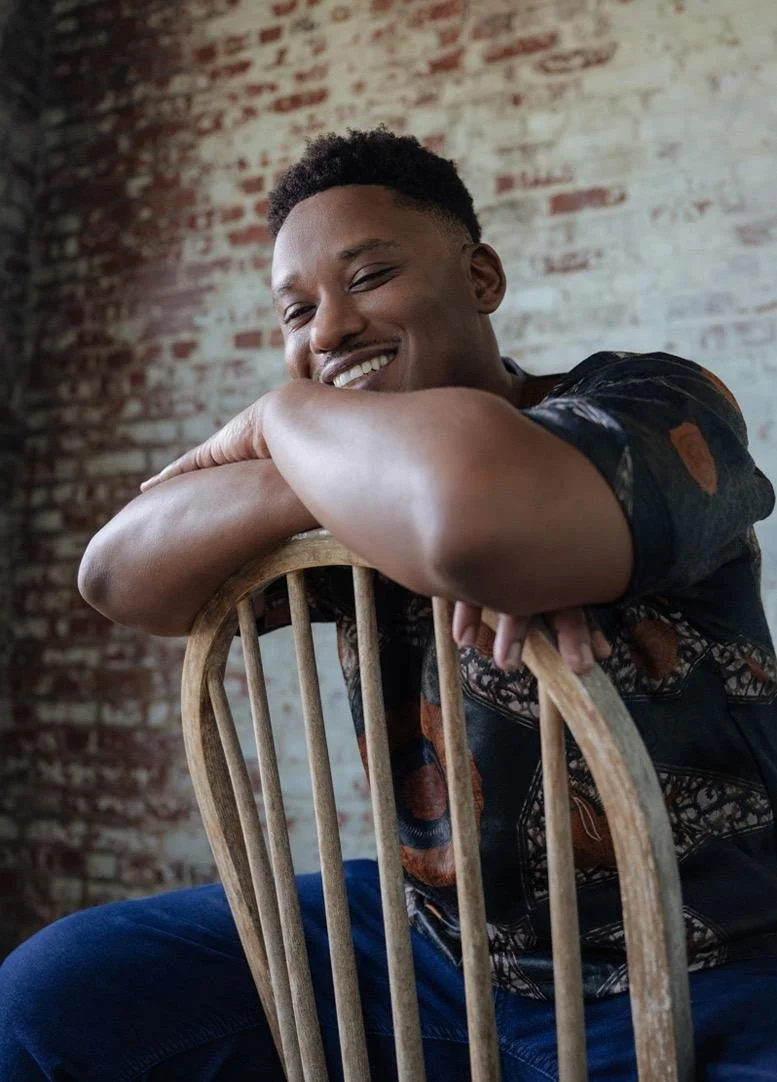

Dr. Claudia A. Fox Tree (Iukaieke Guainia Taino-Arawak) (she/her) is an Indigenous educator, activist, and public speaker with more than 35 years in education. Her work focuses on decolonizing curriculum, racial identity development, and expanding Indigenous representation in teaching and scholarship. Through storytelling and dialogue, she supports educators in challenging stereotypes and building more inclusive learning environments. Claudia earned her Master’s Degree in Education from Northeastern University and Ph.D. from Lesley University, both on unceded Massa-adchu-es-et and Pawtucket territory. She has been a board member of the Massachusetts Center for Native American Awareness (MCNAA) since 2000 and a Massachusetts liaison for the United Confederation of Taino People (UCTP) since 1998.
Claude Gatebuke (he/his) is the executive director of the African Great Lakes Action Network, which is devoted to raising awareness about issues of war, genocide, conflict, and human rights violations. Claude is a human rights educator and co-author of Survivors Uncensored: 100+ Testimonies from Survivors of the Rwanda Genocide. He escaped Rwanda in 1994 and is now a U.S. citizen, living with his family in Nashville, Tennessee. Ha has been co-facilitating workshops with the Upstander Project team since 2018.
Roger Paul (Passamaquoddy, Wolastoq) (he/his) is the co-director of Upstander Academy. He was born to a Passamaquoddy mother who, soon afterward, walked on to the spirit world. His father, who was Wolastoq, along with his community, went to great lengths to protect him from state “child welfare” officials who wanted to send him away to residential school or place him in the foster care system. Thus, Roger grew up on many reservations throughout Maine and New Brunswick. His older brothers and sister were not as fortunate. They were taken and sent to the residential school at Shubenacadie. Roger holds a master’s degree in linguistics from MIT and works as a Wabanaki Languages teacher with the Penobscot Nation, the University of Maine at Orono, and the University of Southern Maine. He takes an active and diligent role in Wabanaki communities towards the preservation, continuing growth, and prosperity of the Wabanaki language, culture, and people.

Mishy Lesser, Ed.D., (she/her) is the learning director for Upstander Project and an Emmy® award-winning researcher. She is also a Strassler Center for Holocaust and Genocide Studies Affiliate and was an Education Fellow at the Dodd Human Rights Impact at the University of Connecticut. Mishy has authored Upstander Project’s many learning and viewer guides. She is a Circle Keeper and has been featured on WBUR (Boston) and PRI/BBC’s The World. Mishy was a Fulbright Scholar in Ecuador and spent 12 years learning and working in the Andes. She is a descendant of Ashkenazi Jews whose ancestral language is Yiddish.

Kristine Malpica, M.A. (she/her) is a researcher for Upstander Project focused on public history and the impacts of settler colonialism, cultural genocide, land dispossession, war and bounty proclamations on Indigenous peoples, past and present. Her work has contributed to the learning materials that accompany Bounty. Her thesis, "Uncommon Ground: Pawtucket-Pennacook Strategic Land Exchange in Native Spaces and Colonized Places of Essex County and Massachusetts Bay in the Seventeenth Century," examines Indigenous dispossession in Massachusetts Bay Colony. Kristine's lifelong passion for fostering and facilitating diverse public arts and cultural programming led her to cofound and direct a nonprofit organization, Imagine Studios, since 1998. She resides in N'dakinna, the ancestral territory of the Pawtucket-Pennacook-Abenaki Peoples.