Dawnland
“The question about Indigenous peoples and North Americans is the fundamental question of this land. Maybe all the fractiles in creation since the arrival of Columbus have finally accumulated enough power to create the Truth and Reconciliation Commission.” —gkisedtanamoogk

Synopsis
For decades, child welfare authorities have been removing Native American children from their homes to “save them from being Indian.” In Maine, the first official Truth and Reconciliation Commission in the United States begins a historic investigation. Dawnland goes behind-the-scenes as this historic body grapples with difficult truths, redefines reconciliation, and charts a new course for state and tribal relations.
Dawnland aired on Independent Lens on PBS in November 2018 and 2021, reaching more than two million viewers. The film won a national Emmy® Award for Outstanding Research in 2019 and made the American Library Association’s list of 2020 Notable Videos for Adults.
Film Details
Genre: Non-fiction
Length: 86 minutes/54 minutes
Language: English
Closed Captions Available: English, Spanish, and French
Audio Descriptions: Download here
dawnland Trailer

How can I watch dawnland?
We offer a number of different ways to view our films so you can choose the option that suits your needs best:

“Dawnland is a film that everyone should see. Removal of Native children isn’t just something that happened far away and long ago, but to Wabanaki communities in Maine in the late 20th century. Watch and be outraged, heartbroken, and hopeful as the Wabanaki labor to protect and heal their most precious and vulnerable members, and some of their non-Native neighbors struggle with the challenge of moving from the role of occupiers to neighbors.”
Meet the dawnland filmmaking team
Directors: Adam Mazo, Ben Pender-Cudlip
Producers: Adam Mazo, N. Bruce Duthu, J.D. (Houma)
Executive Producers: Heather Rae, Beth Murphy, Shirley K. Sneve (Rosebud Sioux)
Director of Photography: Ben Pender-Cudlip
Editor: Kristen Salerno
Composer: Jennifer Kreisberg (Tuscarora)
Learning Director: Mishy Lesser, Ed.D.
Impact Producers: Tracy Rector, Adam Mazo
Senior Advisor: Chris Newell (Passamaquoddy)
Consultants
Margaret D. Jacobs, Ph.D., University of Nebraska, author, A Generation Removed
Anne Makepeace, director, Tribal Justice, We Still Live Here, Rain in a Dry Land
Alanis Obomsawin (Abenaki), National Film Board of Canada, director, Waban-aki: People from Where the Sun Rises, Trick or Treaty, Hi-Ho Mistahey!, Incident at Restigouche, and others
Geo Neptune (Passamaquoddy), artist, educator
Advisors
Chico Colvard, filmmaker, A Family Affair
Donna Hicks, Ph.D., associate at the Weatherhead Center for International Affairs at Harvard University, author of Dignity
Dave Joseph, LICSW, senior vice president for program, Public Conversations Project — Rest in peace and power.
Robert Koenig, filmmaker, Returned
Rebecca Lowenhaupt, Ph.D., assistant professor for educational leadership and higher education at Boston College
Dick Olsen, strategic planner and fundraising consultant


Wabanaki REACH is featured in Dawnland. The organization advances Wabanaki self-determination by strengthening the cultural, spiritual and physical well-being of Native people in Maine. REACH initiated the Wabanaki-State Child Welfare Truth and Reconciliation Commission and is carrying out its recommendations. The filmmakers encourage you to support REACH by making a donation via the REACH website.
Reflect more deeply on dawnland
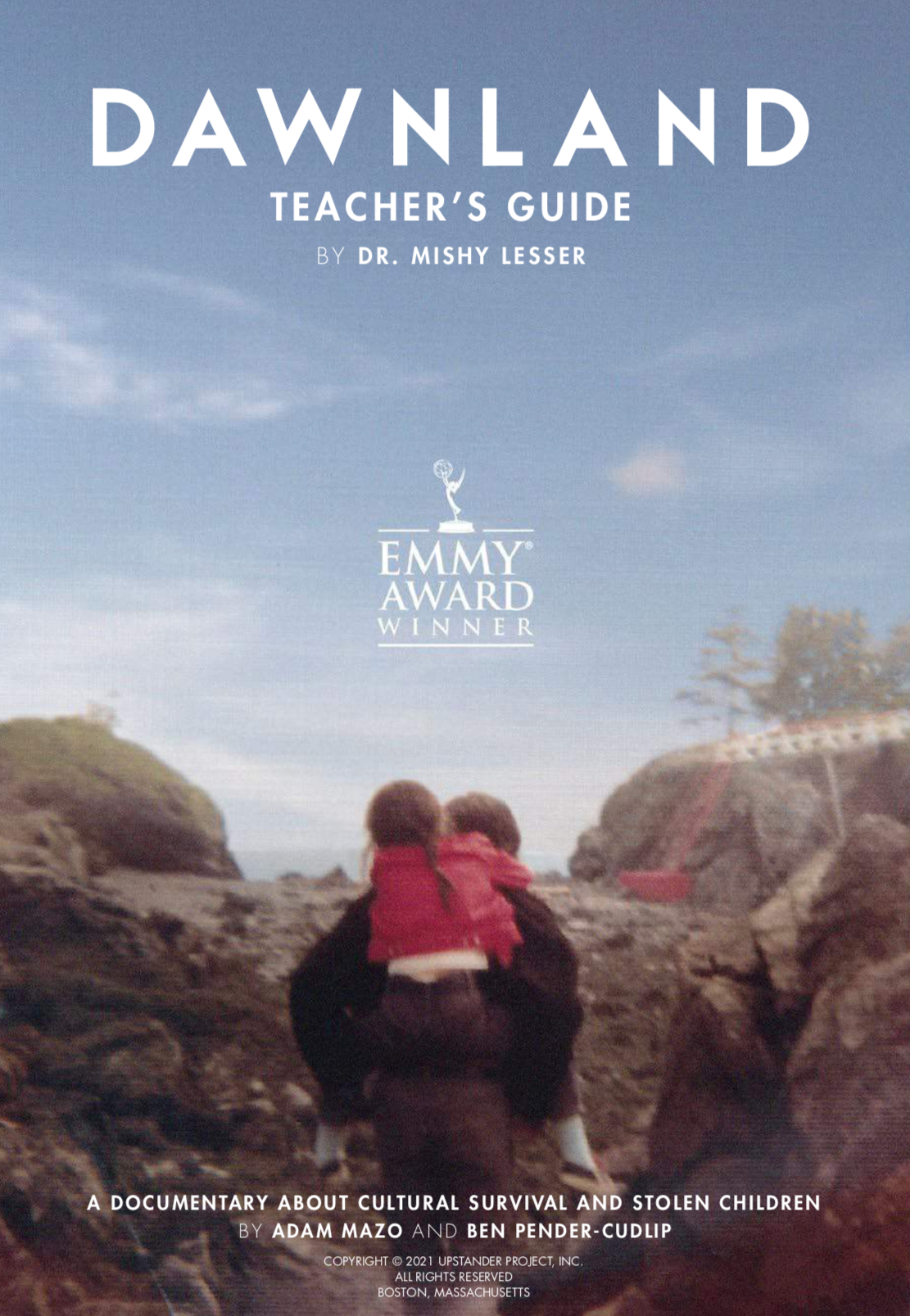
Teacher’s Guide: “What is the relationship between the taking of the land and the taking of the children?” This compelling question at the center of the Dawnland Teacher’s Guide frames study across 12 lessons.
Viewer’s Guide: Written for viewers who want to learn more about the issues behind Dawnland, the Viewer’s Guide is perfect for community screening hosts, neighborhood groups, book clubs, faith organizations, librarians, and people who love documentary film.
Dawnland Supporters and partners